
“The ignorant mind, with its infinite afflictions, passions, and evils, is rooted in the three poisons. Greed, anger, and delusion.”
– Bodhidharma
We’ve all likely heard that term by now, whether you’re a fan of music or someone who works in the music industry, or owns a venue which regularly hosts musical events.
Blue Dot Fever.
Empty blue dots scattered across ticket maps. That stupid little nickname that has become increasingly annoying for a very real problem that’s somehow morphed itself into everyone’s business and reality in 2026. Regardless of which side of the microphone you’re on, you’re feeling it. Tours canceled. Shows downsized. Promoters losing their asses off. Artists and managers scratching their heads for immediate solutions. Industry executives convening in their panels and board rooms to ask the essential question: What’s happening right now?
Just follow the money trail, I say. 99% of America’s problems and oftentimes crimes could be solved if the media, law enforcement, prosecutors, and politicians would adopt a unified front and listen to each other more, and call out – and in some cases prosecute – the bullshit.
Here’s my theory…
The problem isn’t that fans suddenly stopped loving live music. They simply stopped being willing—and in most cases able—to subsidize everyone else’s insatiable appetite for more money. More windfall, hail-Mary type of profits.
For years, concert industry executives have behaved like fan demand and bank accounts are infinite resources. People will just keep taking bites out of their big shit sandwiches under the guise of fancy or clever marketing terms like dynamic pricing. Platinum & Gold passes, with no gold or platinum for the fan, and being a matter of feet away from GA. VIP packages that somehow transformed standing next to the stage into the financial equivalent of a used Honda Civic. Then convenience fees. Facility fees. Processing fees. Fees for the privilege of paying the other fees.
Still, every new pricing strategy is presented as innovation instead of what it often feels like: just another hand reaching into the same wallet only to pull out just a few more bucks.
As of lately, $50+ to park. $200+ for a hotel room. $4-5+ per gallon to drive there. Drinks inside the venue should require a small line of credit to indulge. $10+ for a beer. $18+ for a basic cocktail. $5+ for bottled water. $15+ for nachos.
And by the time the average fan makes it to the artist’s merchandise table – where they once claimed their souvenir for attending – now can no longer afford it because they’re just flat spent-out from every corporation ahead of the artist’s merch table.
Whiskey. Tango. Foxtrot.
One word: Greed. It’s as American as Apple Pie.
The concert industry insists it’s complicated. No doubt.
Artists are facing rising production costs as producers rush to hoard money as a result of AI taking their jobs. Artist crew members deserve better wages across the board. Trucking, insurance, labor, fuel, staging, lighting, security—none of these things are getting any cheaper as time passes.
But somewhere along the way, there’s a difference between covering costs and chasing every possible dollar, completely losing track of the actual sum-total we’re asking concert goers to cough up.
The devil is in the details.
Because while nearly everyone in the business can point to legitimate expenses, nearly everyone has also spent the past decade asking a slightly different question:
“How much more can we get?”
Promoters ask it. Ticketing companies ask it. Venues ask it. Managers ask it. Even artists—yes, even the ones who insist they’re “doing it for the fans”—sometimes do ask it. Those asks, collectively, just keep pushing the average fan farther and farther away from the actual music.
Greed isn’t confined to one boardroom. It’s being built into everyone’s business model.
The irony is somewhat poetic. The same audience the industry spent years treating as an endlessly renewable revenue stream is now making the most old-fashioned market decision imaginable.
They’re saying no. Not because they hate concerts. Because groceries come first. Mortgage and rent comes first. Healthcare comes first. Childcare comes first. The vacation budget disappeared two years ago, and the “fun budget” disappeared shortly after that.
See where I’m going with this?
Live music hasn’t become less valuable. It’s become less accessible to the average concertgoer. That’s an important distinction that everyone in the business seems to have forgotten in their rage for more money.
There’s also an uncomfortable truth the industry seems reluctant to acknowledge: fans do actually have limits.
Every time some corporate titan tries to justify another fee by saying, “People will still pay it,” they carve away that trust.
Blue Dot Fever isn’t a disease. It’s a symptom of the constant excessive greed fans are being faced with every time they want to go out.
It’s what happens when an entire ecosystem spends years optimizing for maximum extraction instead of maximum participation. Maximum experience.
And perhaps the greatest irony is this: the live music business has always depended on community. Fans packed clubs long before billion-dollar tours became a thing. They bought records, wore T-shirts, drove hours to see bands they loved, and introduced new generations to artists who became legends.
The relationship worked because it felt reciprocal. Today, too often, it feels like financial rape. Every interaction has been monetized. Every upgrade has a premium tier. Every experience has become an opportunity to squeeze just a little more from the customer before they reach their seat. For the same show.
Instead of attending multiple concerts and festivals throughout any given year, fans are now forced to settle for only one or two, and for some, none at all.
Eventually, people get fed up. Not because they’re cheap. Because they’re tired of being nickel and dimed for just trying to enjoy live music and to live. The widening divide isn’t just economic anymore; it’s socio-economic, and shit still rolls down hill the last time I checked.
The biggest tours increasingly resemble luxury goods. They’re experiences available to those with disposable income while everyone else watches clips on social media and tells themselves “maybe next time.”
Music was never supposed to become another status symbol, yet here we are with Blue Dot Fever in 2026. This won’t cure itself with better marketing campaigns, influencer partnerships, or more sophisticated termed pricing algorithms.
Perhaps the cure is something far less revolutionary. Charge people what they can reasonably afford. Treat fans like participants instead of revenue targets. Remember that a sold-out arena full of ordinary people is healthier than an arena half-full of people who could afford to ignore the price.
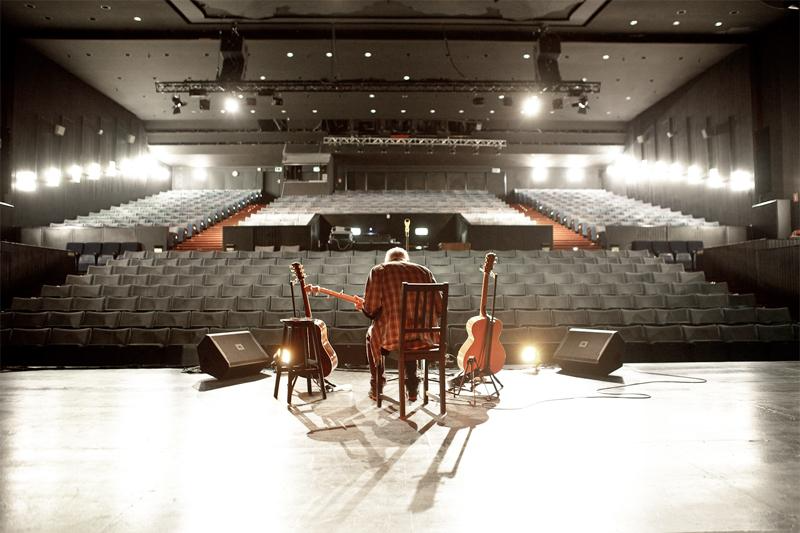
Because empty seats don’t care how optimized your pricing model was.
They’re just blue dots. And every one of them tells the same story.
As the saying goes, “Actions speak louder than words.”
Blue Dot Fever is the fans who are speaking, loudly and clearly.
But is anyone in the concert production industry actually listening?